Showing posts with label oncidopsis. Show all posts

Sunday, September 18, 2016

Oncidopsis Memoria Martin Orenstein 'Lulu'

Oncidopsis Memoria Martin Orenstein 'Lulu'
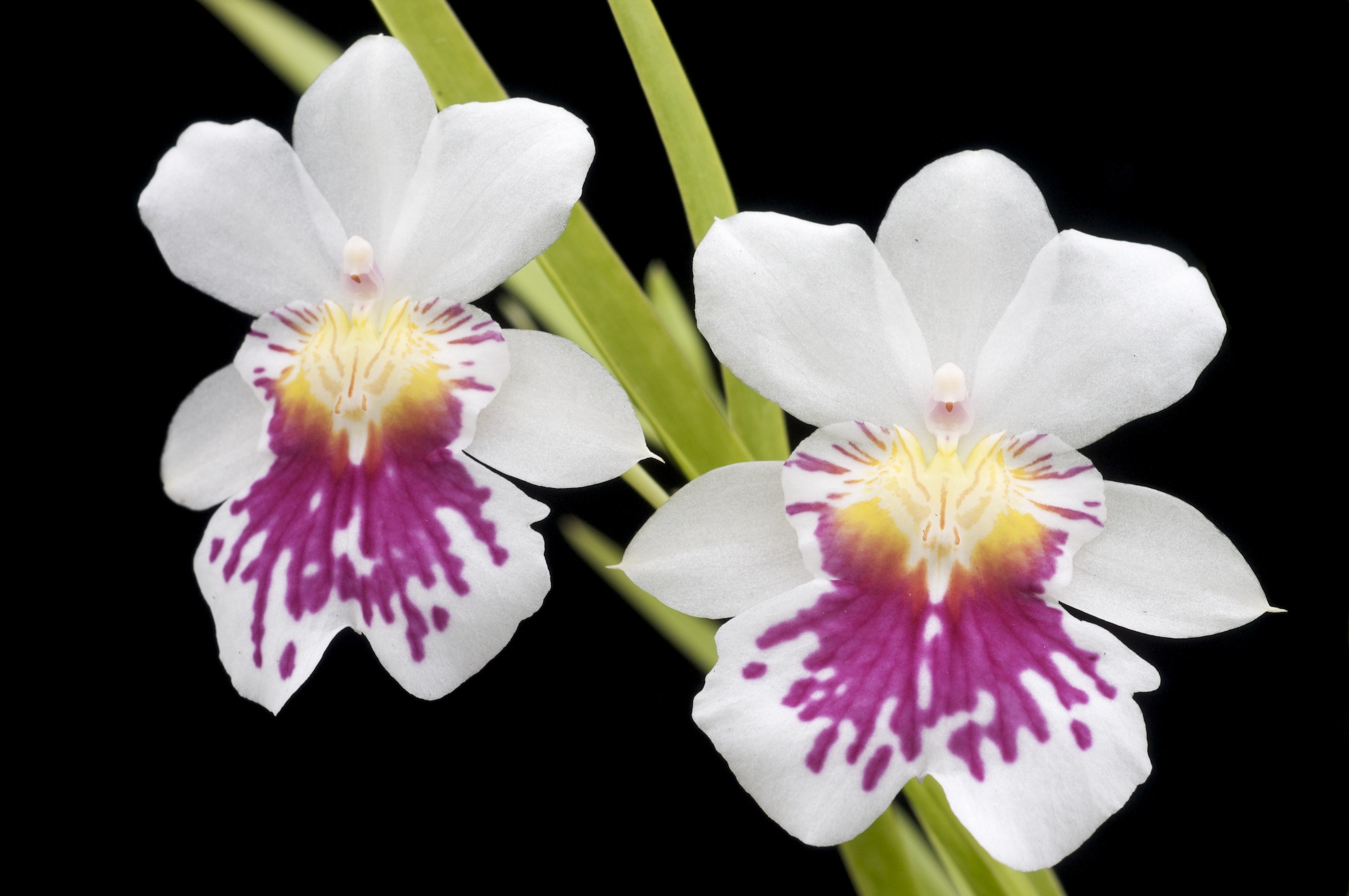
Oncidopsis orchids are hybrids between Oncidium and Miltoniopsis.  This particular hybrid gracefully displays the balance between these two genera: its flowers have the full roundness typical of Miltoniopsis, yet they also display an intensity of color and pattern that reminds me of Oncidium crosses.

Oncidopsis Memoria Martin Orenstein is a 1992 hybrid between Oncidopsis Aglaon and Miltoniopsis Martin Orenstein. It's actually a slightly unusual crossing, because Oncidopsis Aglaon is a very old hybrid: it was registered in 1926.  Such old hybrids don't frequently maintain popularity long enough to still be available for hybridizing nearly a century after their creation.


Genealogy of Oncidopsis Memoria Martin Orenstein
You can see a full resolution version of this image here: http://imgur.com/EVlv8Om

As is typical with orchid hybrids, the breeding scheme for Oncidopsis Memoria Martin Orenstein is a bit of an overcomplicated mess. There are approximately 50 progenitors in the diagram, including 5 Oncidium species and 3 Miltoniopsis species.  

Miltoniopsis breeding clusters very strongly around Miltoniopsis Bleuana, a primary hybrid of M. vexillaria and M. roezlii. Interestingly, this orchid goes by two different names.  M. Bleuana was the first and oldest Miltoniopsis hybrid; it was registered in 1889 and named after its maker, Alfred Bleu.  However, in 1921, the exact same cross was again registered under a different name: M. Reine Elisabeth. 

The reason for all this Miltoniopsis interbreeding is that in the 1800s, orchids of this genus were in very high demand, but botanists' ability to hybridize them was quite limited. There were only 2 possible primary hybrids for botanists to work with: Miltoniopsis Bleuana [roezlii x vexillaria] and Miltoniopsis Venus [phalaenopsis x vexillaria].  It took another half century to discover many of the Miltoniopsis species we know today, and then more time for breeders to generate new primary Miltoniopsis hybrids in the 1990's.  Until then, overzealous Miltoniopsis breeders kept generating endless variants of the same few basic crosses.


Species progenitors of Oncidopsis Memoria Martin Orenstein
Photo credits: 
Oncidium harryanum by Diego Rodriguez (Flickr gallery)
Miltoniopsis roezlii, by Strohero (wikimedia commons)
Miltoniopsis phalaenopsis, Wikimedia commons image

Here are the Orchid species that went into creating Oncidopsis Memoria Martin Orenstein.  These are all a familiar list of suspects that have contributed in various combinations to most other Oncidium and Miltoniopsis hybrids I've profiled: Oncidium alexandre, Oncidium nobile, Oncidium luteopurpureum, Oncidium harryanum, Miltoniopsis vexillaria, Miltoniopsis roezlii, and Miltoniopsis phalaenopsis.

The lip coloration of Miltoniopsis phalaenopsis shows up in the final hybrid.  Likewise the purple of Miltoniopsis vexillaria comes through, as does the slightly more ruffled flower shape of Oncidium alexandre and Oncidium nobile. It remains a mystery to me what any of the other oncidium species might have contributed to this cross, or whether their traits have been effectively bred out of the orchid during the hybridization process.

Wednesday, July 13, 2016

Oncidopsis Yellow Parade 'Alpine'

Oncidopsis Yellow Parade 'Alpine'
This cheery yellow orchid is an old but still popular hybrid.  The intergenic cross between Oncidium and Miltoniopsis results in compact plants that bloom with spikes of two to five 2.5-inch flowers.  Oncidopsis Yellow Parade is a 1988 hybrid between Oncidopsis Yellow Bird and Oncidium Parade. It seems that the parents of this hybrid are no longer commonly cultivated, as I could not find images of their flowers. 

I was, however, just barely able to complete the genealogy of this orchid.  This orchid has 68 progenitors, resulting in a sprawling genealogy tree. However, in the mess that is typical of early 20th century orchid breeding, there are actually only 8 orchid species that have contributed to this cross.  On the Miltoniopsis side of the family tree, only 2 Miltoniopsis species (M. vexillaria and M. roezli) have generated 16 progenitors. 

All in all, it resulted in an intricate family tree that I encourage you guys to check it out. (the chart is much too large for the image embedded below to be legible, but it gives a scale to the breeding scheme.)
The very complicated genealogy of Oncidopsis Yellow Parade

One interesting observation revealed by Oncidium Yellow Parade's genealogy is how it is closely related to several of the other Oncidium hybrids I've profiled recently.

For example, Oncidium Brimstone Butterfly and Oncidium Golden Guinea are common progenitors for both Oncidopsis Yellow Parade and Oncostele Wildcat (which is itself a progenitor to several orchids I've written about.  The progenitors of Brimstone Butterfly and Golden Guinea account for 34 out of the total 68 orchids that went into the breeding of Oncidopsis Yellow Parade.  Essentially, Oncidopsis Yellow Parade shares about 50% of its genetics with Wildcat, Catatante and Sunkissed.

Oncidopsis Yellow Parade also contains ALL 16 of the progenitors that went into breeding Oncidium Midas.


These oncidium intergenics are closely related
There is definitely a similarity in the flower shape and general looks of Oncidopsis Yellow Parade and Oncostele Wildcat. The resemblence to Oncidium Midas is less pronounced by not completely absent.

Additionally, I have located my new record for oldest oncidium hybrid: Oncidium Wilckeanum.  This hybrid was registered in 1880!  O. Wilckeanum is a naturally occuring cross between Oncidium alexandre and Oncidium luteopurpureum.  During the late 1800's orchid enthusiasts would attempt to replicate natural hybrids by crossing the species they suspected to be parents of a given hybrid orchid.  Oncidium Wilckeanum was one of the very first hybrids to have its parentage registered and recognized (though not without continuing controversy and debate).  No one seems to grow this cross anymore, however, as I could not find any images of what this hybrid may have looked like.

Finally these are all of the 8 species that were bred together to create Oncidopsis Yellow Parade: 6 species of Oncidium and 2 Miltoniopsis.


Progenitor species for Oncidopsis Yellow Parade
Photo credits: 
Oncidium hallii by Andreas Kay (Flickr gallery)
Oncidium harryanum by Diego Rodriguez (Flickr gallery)
Miltoniopsis roezlii, by Strohero (wikimedia commons)


Monday, June 13, 2016

Oncostelopsis Sunkissed 'Buttercup'

Oncostelopsis Sunkissed 'Buttercup'
The grex name of this yellow orchid is a bit of a mouthful.  However, its genealogy is not too different from the last two orchids I wrote about on this blog.  Oncostelopsis are a cross of oncidium, rhynchostele, and miltoniopsis orchids.  This particular hybrid is the product of a 2009 cross between Oncostele Catatante and Oncidopsis Living Fire. 

Parentage of Oncostelopsis Sunkissed
Photo Credit:
Oncostele Catatante: Maria's Orchids, Oncostele Catatante
To be frankly honest, I am thoroughly underwhelmed by this hybrid.  The orchid seems to have inherited neither the prolific bounty of flowers typical of Oncostele Catatante, nor the brilliantly vivid crimson of Oncidopsis Living Fire.

Genealogy of Oncostelopsis Sunkissed
Progenitor species of Oncostelopsis Sunkissed
Photo credits:
Note: Oncostelopsis Sunkissed was referred to as Burrageara Sunkissed until the most recent reclassification of Oncidium alliance species resulted in a change of the genus name.