Showing posts with label dehydration. Show all posts

Monday, January 9, 2012

How often should I water my angraecum leonis?


     As I described in this earlier post, I've been growing my angraecum leonis in a vase, with its roots exposed to the air.  Angraecums are members of the vandaceous family of orchids, and like vandas, they can grow very well in baskets, mounts, other exposed-root conditions.


     Although I love how mounted orchids look, they require near daily watering and consistently high humidity to thrive, which I may not always be able to provide.  While NYC is incredibly humid during the summer (80-90% humidity for the majority of last summer), in the winter humidity drops to the 50-60% range.  Meanwhile indoor heating dries the air out in my apartment even further.  Although I do have a supersonic humidifier near my orchids, I don't always remember to keep it filled and running. As a compromise, I've been growing my angraecum leonis in a vase, which still leaves the roots exposed to the air, but also retains a higher local humidity around the roots.


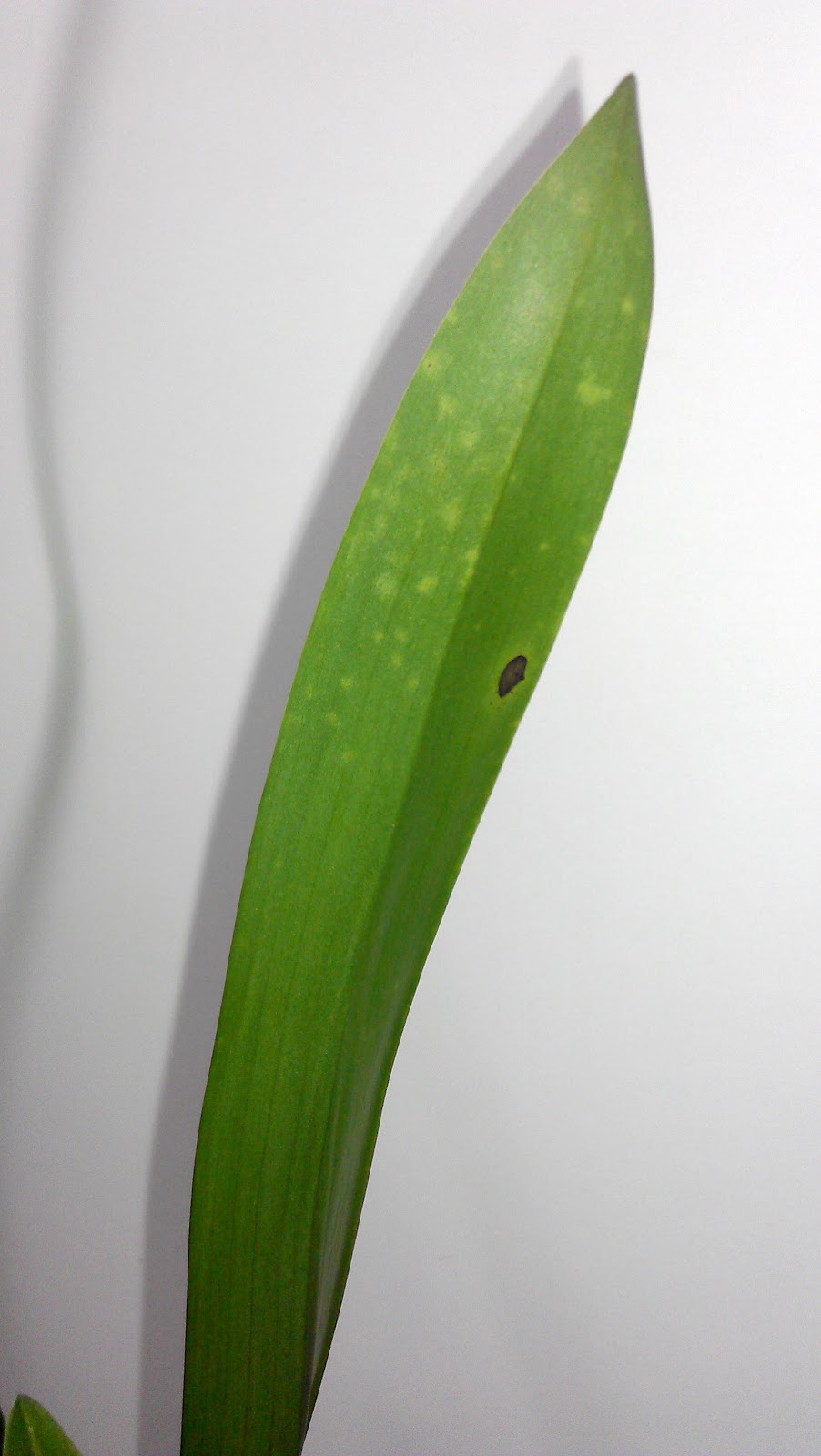
     I am not sure what the optimal watering frequency for my angcm leonis should be.  Unlike my potted orchids, I can't really water it too frequently.  Up until now I have been watering every 2-3 days, and the plant has fared well and grown a multitude of new root tips since summer.  However, the old leaves on the orchid have wrinkled dramatically.  This wrinkling has particularly worsened after my winter holiday trip when the orchid had only one watering over a 15 day period.  


     Since coming back from the holidays I've started watering my angcm leonis daily, in the hopes of reducing some of the wrinkling on the leaves.  In part, I don't find the wrinkled leaves to be aesthetically pleasing, but another motivation for the increased watering is that I want the plant to have greater reserves to draw upon next time I go away on a multi-week trip.  


     Will increased watering undo the wrinkling on these leaves?  Even if the old leaves are irreversibly wrinkled, I hope to prevent it in the newest leaf that is growing now. 


Saturday, December 17, 2011

Oncidium NOID: the rescue

Luscious foliage

     I picked up this orchid along with a masdevallia from the local botanical garden in August.  The plants were marked down due to being sold out of bloom, and while they both had beautiful leaves, their root systems were in critical condition.  The masdevallia died within a few weeks of purchase, but this oncidium NOID has become a study in how far an orchid can go into neglect and still survive.

pseudobulbs should never be this flattened


     What I hadn't realized at the time of purchase, was that this plant did not have a single living root, and its pseudobulbs were dehydrated to the point of being as flat as the leaves.  This damage was likely caused by poor watering technique.  In the last few months, the newest growth on the plant rotted off because the orchid could not support it.  Meanwhile, it has put out several new roots, and is now setting out a small new growth as well.

a new growth poking through

     Hopefully between this oncidium and my other onc noid I will eventually own a healthy plant to enjoy the genus' canonical round pseudobulbs and easy regular blooms.

Oncidium NOID: the faded glory


     This oncidium NOID is the only other orchid to have survived the move with me.  I picked up the plant 2 years ago at a farmer's market with a 3 foot tall spike resplendent in burgundy blooms.  A plant so large was a sure bet to rebloom for me year after year, I thought.  If I knew then what I know now, I would have seen the signs of trouble.  Within two weeks, it dropped most of its flowers, and has sulked since.


wrinkled pseudobulbs are a sign of trouble


     Two years later, after some reading on proper oncidium care, I finally got suspicious about the state of the plant.  The pseudobulbs on this plant are all strongly wrinkled, which is a sign of dehydration.  While it is natural for old pseudobulbs to wrinkle slightly over time, the newest growth (top right of picture) should be plump.  The wrinkled state of these pbulbs are a clear sign of root trouble.  Another red flag is that the newest pseudobulb is only half the size of the two older ones.  If an orchid is healthy and growing, then new growths should never be smaller.  In the very top picture of this post, you can also see wrinkling on the two leaves at the front.  The wrinkling indicates that the orchid was not getting enough water at the time when those leaves were forming.


     When I finally got around to repotting the plant, the plant fell out of its oversized 8-inch pot... with the roots contained within the shape of a smaller 5" diameter mass.  The rest of the outside pot was filled with badly decayed wood shavings, and contained no roots at all.  Meanwhile in the heart of the root mass I found a smaller 2.5" plastic pot buried around the oldest growth.  This plant has not been properly repotted since it's very first deflasking!


    Lesson learned: always repot an orchid when you first get it.  You never know the true health of a plant until you see the state of its roots, and even reputable seeming vendors can sell orchids which are in bad need of repotting.


After I finished cutting away the old plastic from the root mass, the plant was left with very few healthy roots.  Within weeks of the repotting however, the young growths sprouted a veritable pincushion of new root tips.


A few weeks after re-potting: you can almost hear its sigh of relief

The roots today

Even a couple months after the initial repotting, the plant continues putting out roots.  Some of the initial roots have failed, while others seem to have established themselves (the white roots on the left).  Meanwhile, the leaves on the new growth have since doubled in size. 

I particularly like the purple tinge on the new growths

 I am a little concerned by the black spots on the top of the new leaves though.  I'm not sure what caused this damage, but at least it hasn't progressed since first appearing.

water damage or lampburn?

The plant still has a ways to go before it fully recovers.  Oncidiums bloom from new pseudobulbs, and since the newest pbulb has already aborted an attempt at blooming, I will likely have to wait for a new pseudobulb to grow before I can hope for a flower spike. I guess I will have to be patient before I can hope to see those gorgeous blooms again.

EDIT 3/29: Identified as Wilsonara Pacific Perspective!