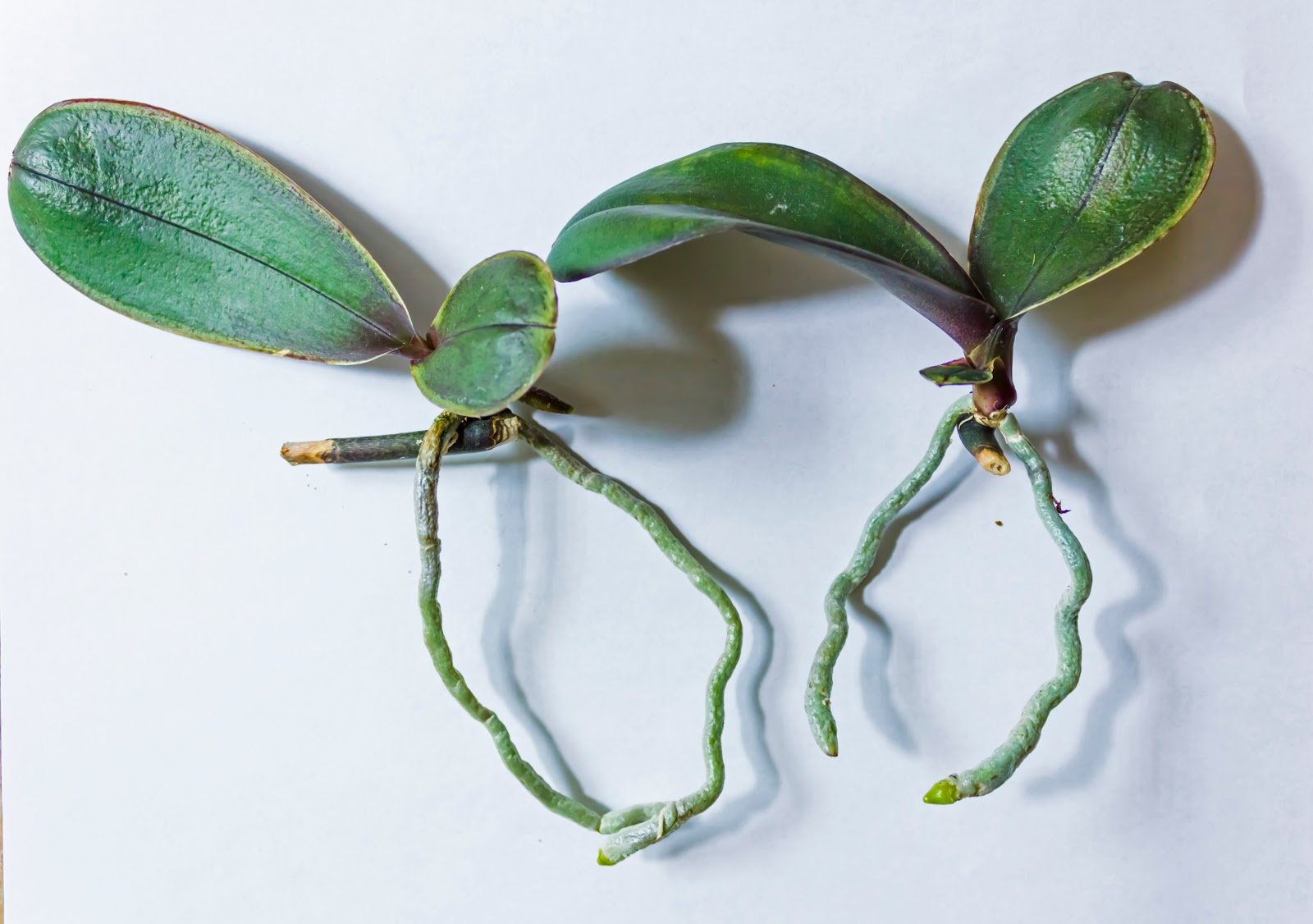
Phalaenopsis with keiki ready to be removed
Phalaenopsis noid 'keiki 2'
After 13 months of growth, the keiki is ready to be potted on its own. The main trigger for removing it was that the spike started drying up above the keiki, and would soon no longer provide it nutrients.
Phalaenopsis keiki ready for potting
With two roots that are 3.5" long, and two leaves, this keiki is ready to support itself. Just like last time, I soaked the roots in water+superthrive, and curled them into a 3" slotted plastic pot with phal bark media.
Newly potted phalaenopsis keiki
The loosely packed coarse media dries very quickly in a small pot like this one, so I will be watering it every 1-2 days. My thought is that this should allow me to both water frequently, but still let the roots acclimate to being buried in media without having them stay moist for extended periods of time. I don't know if this is necessary, but the first keiki is doing fine one month after potting, so I see no harm in using potting conditions that don't maintain much moisture.

The phalaenopsis mother plant now has only one keiki left. This one is much smaller than the others, and its roots (1-2") are still much too short to support it on its own. The mother plant is looking quite drained now; it shed another of its long leaves, and the remaining ones have taken on a withered and leathery appearance. There is new root growth, and the old roots seem to be healthy, but the newest leaves have been coming in short and stunted. Hopefully once all the keikis are removed, then this phal will be able to recover.
New growths on phalaenopsis spikes
On the other hand, the spikes have recently activated two new growths. It's too soon to tell whether these are spike branches, or the starts of even more keikis. The keikis looked very similar to this when they first appeared, before the leaves unfurled. I'm really hoping that these are spike branches though, that will lead to flowers. In part because I don't know what I'd do with even more white noid phals. But also, because another year of growing keikis might be terminally draining on the mother phal (even more so than blooming).
Time will tell.